Institute for International Law and Human Rights
WASHINGTON, DC • BRUSSELS • BAGHDAD
The Institute for International Law and Human Rights (IILHR) is a 501(c)(3) non-profit organization registered in Washington, DC; Brussels, Belgium; and Baghdad, Iraq. IILHR helps transitioning states develop the capacity to strengthen democratic values and build respect for human rights.
With a staff of diplomats, parliamentarians, human rights activists, and attorneys, IILHR has a strong track record of implementing programs with local partners that foster dialogue and create better policies to protect citizens’ rights.
As an organization focused on strengthening human rights in countries emerging from conflict, IILHR upholds the freedom and equal dignity of all human beings and is committed to the principles of diversity, equity, inclusion, and non-discrimination.
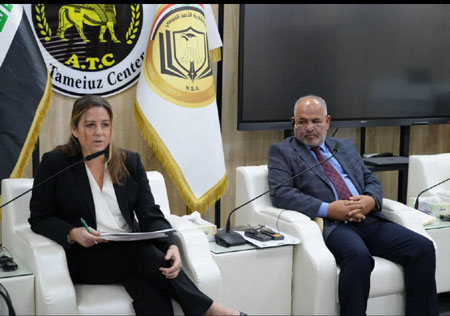
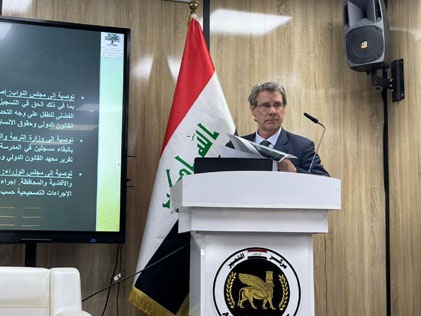
New Document: Reclaiming Identity: Strategies for Civil Documentation in Iraq
On March 27th, IILHR presented its final report “Reclaiming Identity: Strategies for Civil Documentation in Iraq” in collaboration with the National Security Advisor’s Office at the Al-Tamyeez Center in Baghdad. The event goals were aimed at pushing forward implementable solutions directly to the Government of Iraq (GOI) and bringing international missions together with Iraqi stakeholders to begin taking steps to implement the recommendations set forth in the Report.
Based on extensive fieldwork, interviews, consultations and research, this report analyzes the crisis of missing documentation with the goal of finding workable, durable, and implementable solutions. This report highlights the importance of civil documents and the difficulties faced by Iraqis who lack civil documentation. It identifies the groups most affected by missing documentation. It investigates the barriers – procedural, situational, and cultural – that exist in the current system of issuing documents. It also addresses regional variation in the numbers of Iraqis missing documentation and the challenges they face obtaining civil documentation. This kind of detailed data and analysis is especially important now, in the wake of the de-activation of Iraq’s protection cluster system, as part of the UN’s transition away from a primarily humanitarian- focused response and a significant decrease in international funding for humanitarian aid. An accurate understanding of whose needs are most pressing, where, and why, is crucial to planning and implementing policies and effectively targeting assistance.
New Leadership Appointments
The Institute for International Law & Human Rights (IILHR) is pleased to announce the appointment of Charles J. Brown as its new Chair of the Board and acting President & CEO and Robin L. Gary as its new Executive Director.
In the wake of the sudden passing of Founder William “Spence” Spencer, Charlie, Robin, and the entire IILHR team are working to continue Spence’s extraordinary work. In particular, Robin’s promotion to Executive Director underscores our enduring commitment to Iraq and our steadfast resolve to stand with the people of Iraq at this challenging time.
Charles J. Brown has held senior positions in the US Departments of Defense and State and served in leadership positions in several non-governmental organizations (NGOs), including IILHR, Amnesty International USA, and Freedom House. He is currently Managing Partner at Strategy for Humanity, a consulting firm that works with mission-driven organizations and those who fund them on a range of projects and initiatives. Prior to joining Strategy for Humanity, he served as Senior Advisor on Atrocity Prevention and Response in the Office of the Undersecretary of Defense for Policy and as the Principal Deputy in the Office of Rule of Law and International Humanitarian Policy. He has also served as Chair of the bipartisan Experts Committee on Preventing Mass Violence; the Leonard and Sophie Davis Genocide Prevention Fellow at the U.S. Holocaust Memorial Museum; Chief of Staff in the Bureau of Democracy, Human Rights, and Labor in the U.S. Department of State; and a member of the US delegation to the Rome Conference on the Establishment of an International Criminal Court.
Robin L. Gary brings a wealth of experience working on strengthening democracy, rule of law and human rights in post conflict setting over the last 17 years. Robin has been instrumental in IILHR initiatives both in and outside of Iraq since joining at its inception in 2008. She has held progressively more senior positions withing the organization, starting as Legal Advisor, then as Chief of Party, and, for the last four years, as its Country Director in Iraq. Under her leadership, the Baghdad based team has successfully implemented projects supporting the Parliament, the Judiciary and ensuring access to identity documentation for internally displaced persons and other vulnerable Iraqis. Robin has also served as the Deputy Head & Legal Advisor of the Constitution Project at UNDP Somalia; Litigation Staff Attorney at the law firm of Paul, Weiss, Rifkind, Wharton, and Garrison LLP; a pro bono Immigration Legal Advisor to the U.S. Commission on International Religious Freedom; Staff Attorney for the Public International Law & Policy Group; and as an officer on Pew Charitable Trusts’ International Oceans & Protecting Ocean Life on the High Seas Campaign. She is a graduate of American University’s Washington College of Law and holds a Master of Arts in International Affairs from American University’s School for International Service as well as a Bachelor of Science in Social Work from the University of Vermont. Ms. Gary is a licensed member of the District of Columbia Bar.
William Hall “Spence” Spencer IV, IILHR Executive Director, Passes Away at 61
William “Spence” Spencer was the Founder and first Executive Director of IILHR. Spencer had more than 25 years of professional experience in diplomacy, human rights, democracy and governance, international law, and crisis management and response, both as a career diplomat and as an advocate in the field. He was intimately familiar with post-conflict rebuilding and peace and constitutional negotiations in the former Yugoslavia, Afghanistan, and Iraq.
In 1996, Spencer helped to configure Bosnia’s first post-war elections and oversaw implementation of human rights components of the General Framework Agreement for Peace in Bosnia and Herzegovina. As a career foreign service officer with the U.S. State Department, Spencer served as Senior Duty Officer in the White House Situation Room, supported Transatlantic institutions such as NATO and the OSCE, and coordinated policy and resource support for human rights in the former Yugoslavia and the Yugoslav War Crimes Tribunal. He served as a delegate to the Rome Conference to establish an International Criminal Court in 1998.
In Iraq, he advised the government on diverse constitutional and legislative issues from 2005 to 2024. He oversaw a legal team that advised both the Iraqi Federal and Kurdistan Regional parliaments, and he worked on accountability and justice issues with Iraq’s judiciary. He passed away on February 1, 2024, leaving behind an enduring legacy of humanitarianism and human rights advocacy.

Higher Judicial Council Implements Criminal Justice Reform
In August 2023, Iraq’s High Judicial Council formally instructed all Iraqi courts to adopt new templates and checklists – jointly produced by senior judges and IILHR staff – in case file documentation, to increase reliance on evidence other than confessions and highlight other issues, such as defense counsel activities.
From January 20 to 22, 2024, IILHR, in partnership with the High Judicial Council, organized three landmark events at the Judicial Development Institute and the Judicial Training Institute to begin implementing the Council’s August directive.
Participants included 36 sitting trial judges from across Iraq and 75 future judges and prosecutors at the Judicial Training Institute. The seminars begin the effort to embed these tools and templates into current and future Iraqi practice.
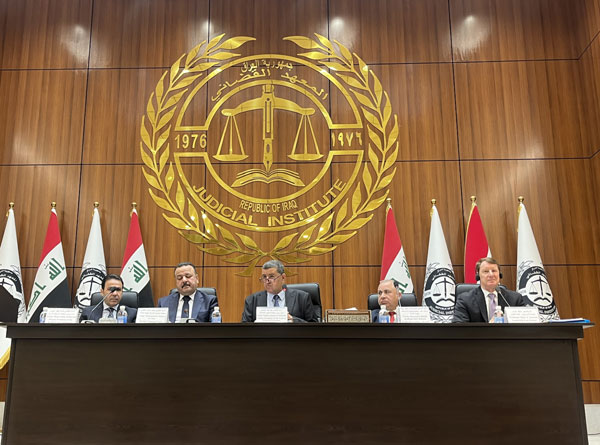
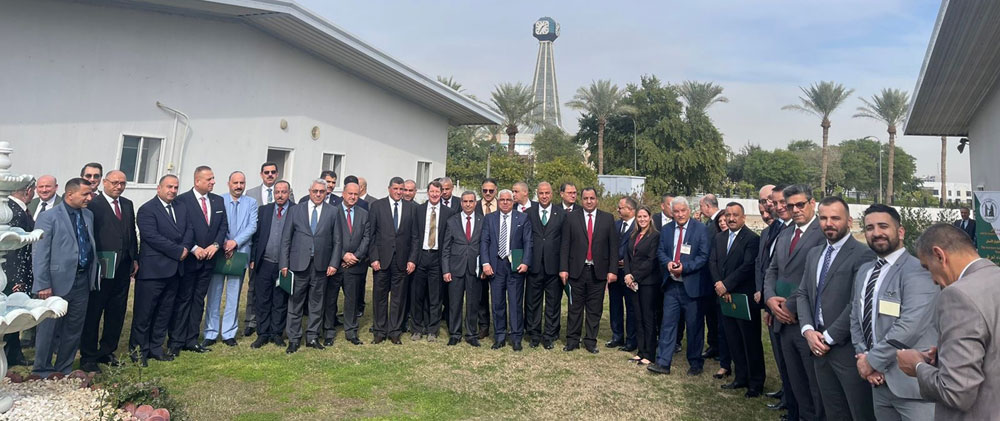
New Document: Legislative Drafting Guide for Iraqi Members of Parliament
On 11 and 12 February at the Council of Representatives in Baghdad, IILHR launched its Legislative Drafting Guide for Iraqi Members of Parliament. This guide was the result of over a year of work and includes contributions from several key actors in Iraq, including the State Council, Office of the President, members of the judiciary, senior and former Members of Parliament and academia. It has been developed as a user-friendly resource for Members of Parliament to act as a resource on the basic elements of legislative drafting.
The launch event included presentations on various aspects of legislative drafting by several experts, including the Parliamentary Legal Committee, Office of the President, members of the judiciary and the Parliamentary Legislative Department. The event was gratefully facilitated by the Parliamentary Development Institute.
Current Projects
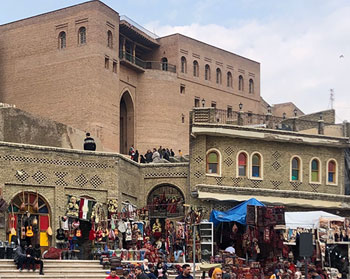
Energizing Reform and Empowering Vulnerable Groups in Iraq
Our goal is to deepen citizenship and political participation through stronger laws that implement Iraq’s constitution and promote inclusiveness and accountability; build dialogue and consensus around legislative and grassroots priorities; and strengthen research, technical, and advocacy skills to empower local and vulnerable groups through inclusive citizens teams that provide community-based input to reforms in Erbil and Baghdad.
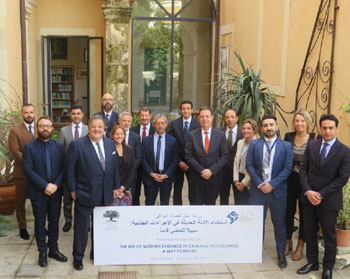
Supporting Better Evidence-Based Approaches for the Iraqi Judiciary
Our goal is to provide training and mentoring to the government of Iraq and the Kurdistan Regional Government to effectively investigate, prosecute, and adjudicate terrorism-related crimes. We also want to facilitate a more effective, responsive, and accountable criminal justice system that provides a safe and secure domestic environment, regulated by laws that are evenly applied, independently adjudicated, and consistent with international standards.
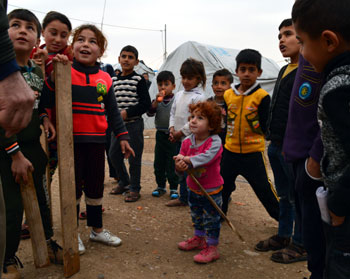
Ensuring Iraqi Citizen Access to Identity Documents
Our goal is to ensure Iraqi citizens, through a clear and transparent process, have access to necessary identity documents so that they may fully participate in civic life.

WASHINGTON, DC
4836 MacArthur Blvd NW
Suite 100
Washington, DC 20007
Tel. +1 202-342-0985
BRUSSELS
Avenue Louise 489
1050 Ixelles
Brussels, Belgium
Tel. +32 2 781 08 23
BAGHDAD
International Zone
Baghdad, Iraq
Tel. +964 790 128 7010
© 2023 INSTITUTE FOR INTERNATIONAL LAW & HUMAN RIGHTS

© 2022 INSTITUTE FOR INTERNATIONAL LAW & HUMAN RIGHTS